
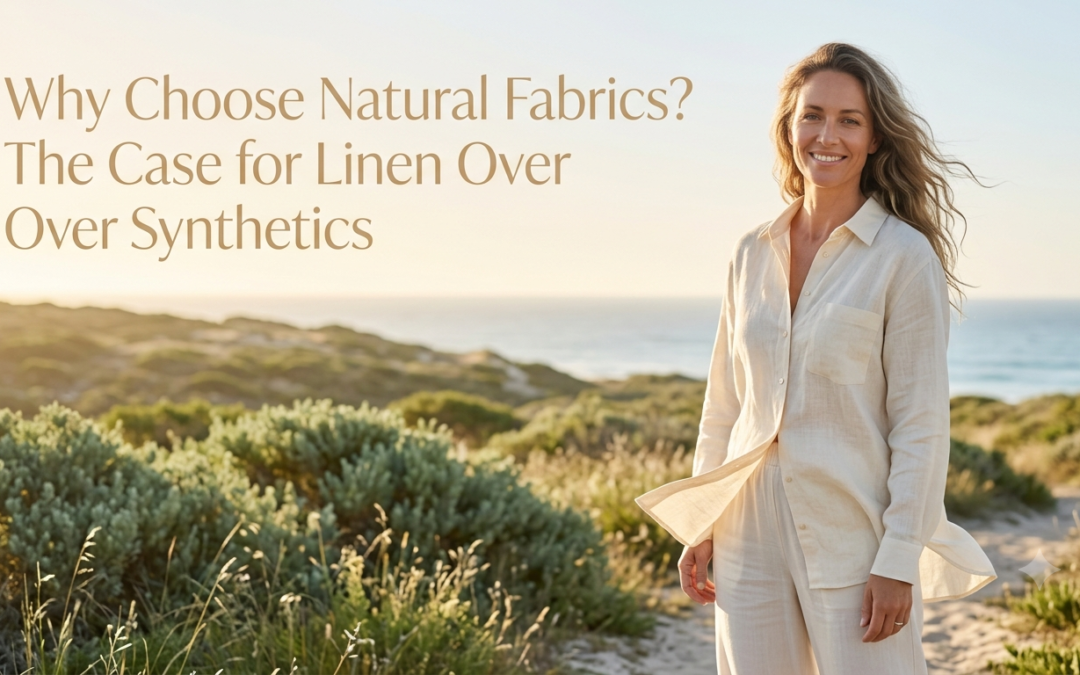
As more people embrace sustainable living, the fabrics we choose matter more than ever. While synthetic materials like polyester and nylon dominate the fashion industry, natural fabrics such as linen offer a healthier, more eco-friendly alternative. Made from the flax plant, linen is breathable, durable, biodegradable, and comfortable, making it an excellent choice for clothing and home textiles.
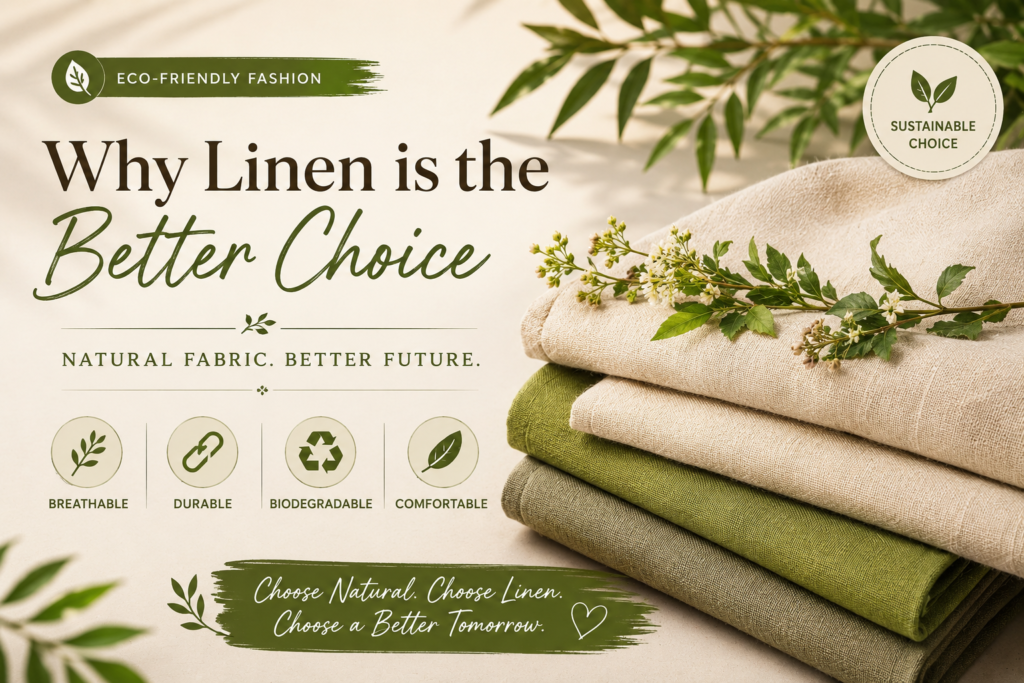
What Are Natural and Synthetic Fabrics?
Natural fabrics are made from plant or animal fibers. Popular examples include cotton, wool, silk, and linen. Synthetic fabrics, such as polyester, nylon, and acrylic, are created from petroleum-based chemicals through industrial processes.
Although synthetic fabrics are affordable and widely available, they have a significant environmental impact. Natural fabrics, on the other hand, are renewable, biodegradable, and generally safer for both people and the planet.
Why Linen Stands Out
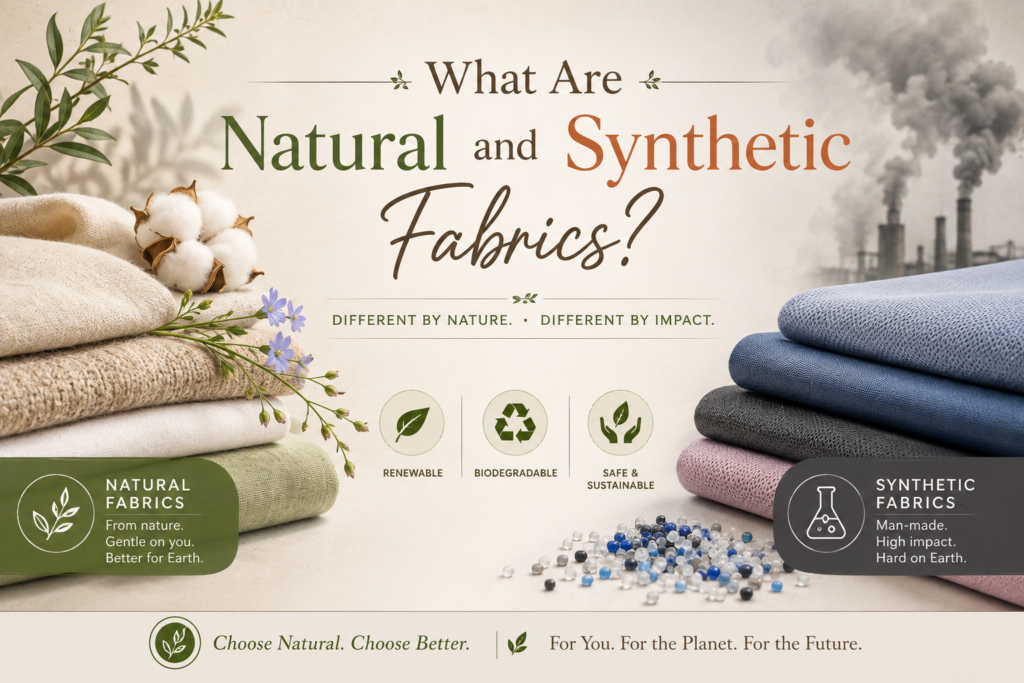
1. Eco-Friendly and Biodegradable
Linen is one of the most sustainable fabrics available. Since it comes from the flax plant, it naturally decomposes without leaving harmful waste behind. Unlike synthetic fabrics that can take hundreds of years to break down, linen returns safely to the earth after use.
2. Uses Less Water and Energy
Flax requires significantly less water than many other textile crops and often grows with minimal pesticides. Linen production also consumes less energy than the manufacturing of synthetic fabrics, making it a more environmentally responsible choice.
Linen vs. Synthetic Fabrics
Synthetic fabrics are made using non-renewable fossil fuels and contribute to pollution throughout their lifecycle. They also tend to trap heat and moisture, making them less comfortable, especially in warm climates.
Although linen may have a higher initial cost, it lasts much longer than many synthetic garments. Its durability means fewer replacements over time, making it a smarter long-term investment.

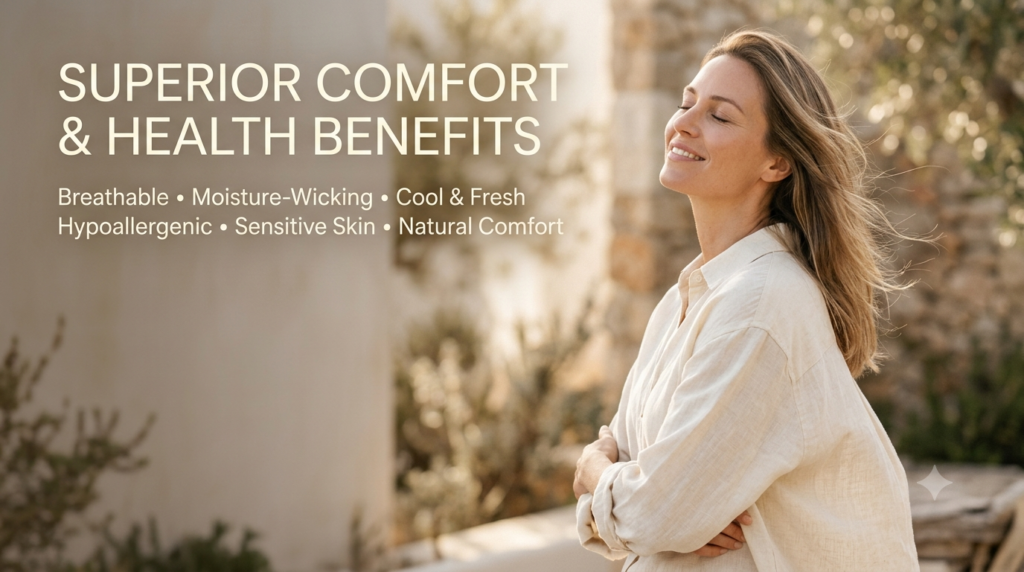
Superior Comfort and Health Benefits
Breathable and Moisture-Wicking
Linen allows air to circulate freely, helping regulate body temperature and keeping you cool during hot weather. Its moisture-wicking properties also help absorb sweat, making it ideal for summer wear.
Gentle on Sensitive Skin
Linen is naturally hypoallergenic and contains fewer chemicals than synthetic fabrics. This makes it a great option for people with allergies or sensitive skin, offering lasting comfort without irritation.
Better for the Environment
The production of synthetic fabrics releases large amounts of greenhouse gases because it depends on fossil fuels. Linen has a much smaller carbon footprint, as flax absorbs carbon dioxide while growing and requires fewer resources to cultivate.
Another major advantage is waste reduction. While synthetic clothing can remain in landfills for centuries and contribute to microplastic pollution, linen naturally decomposes and is far less harmful to the environment.
Built to Last
Linen is known for its exceptional strength. With proper care, linen garments can last for decades without losing their quality. Instead of weakening over time, the fabric becomes softer with each wash while maintaining its durability.
Unlike many synthetic fabrics that pill, stretch, or wear out quickly, linen retains its appearance and performance for years, reducing the need for frequent replacements.
Caring for Linen
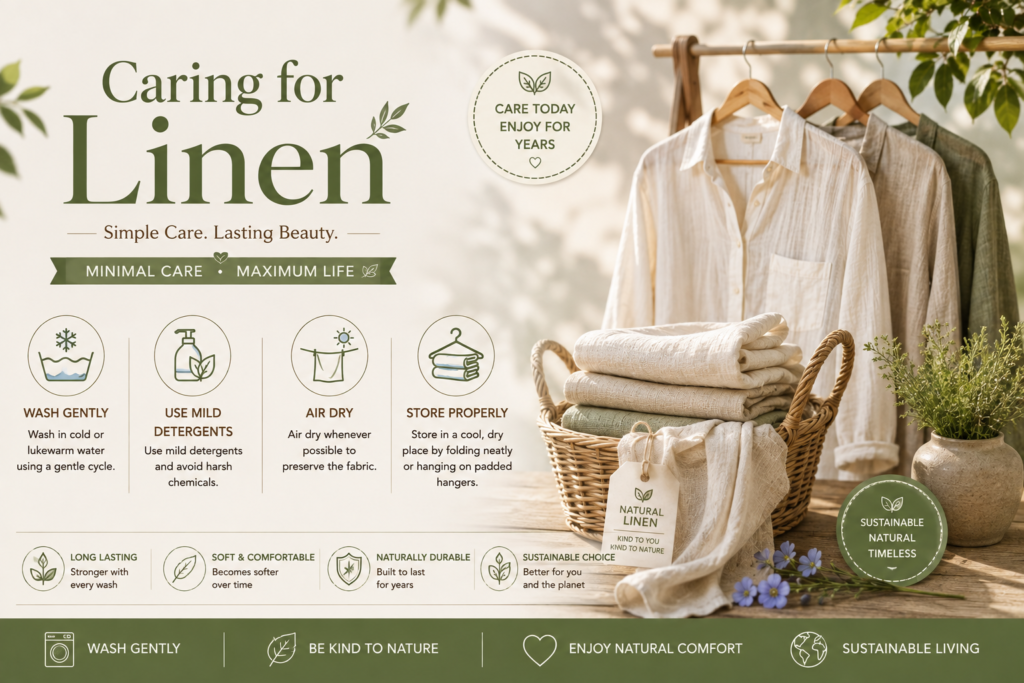
Maintaining linen is simple:
- Wash in cold or lukewarm water using a gentle cycle.
- Use mild detergents and avoid harsh chemicals.
- Air dry whenever possible to preserve the fabric.
- Store in a cool, dry place by folding neatly or hanging on padded hangers.
With minimal care, linen remains beautiful and comfortable for many years.
Conclusion
Choosing linen over synthetic fabrics is a small decision that creates a lasting impact. It offers superior comfort, exceptional durability, and significant environmental benefits. Whether you’re shopping for everyday clothing or home textiles, linen provides a sustainable solution without compromising on style or quality.
By switching to natural fabrics, you support eco-friendly practices, reduce waste, and invest in products that are designed to last. Linen isn’t just a fabric—it’s a smarter, healthier, and more sustainable choice for the future.